The short answer
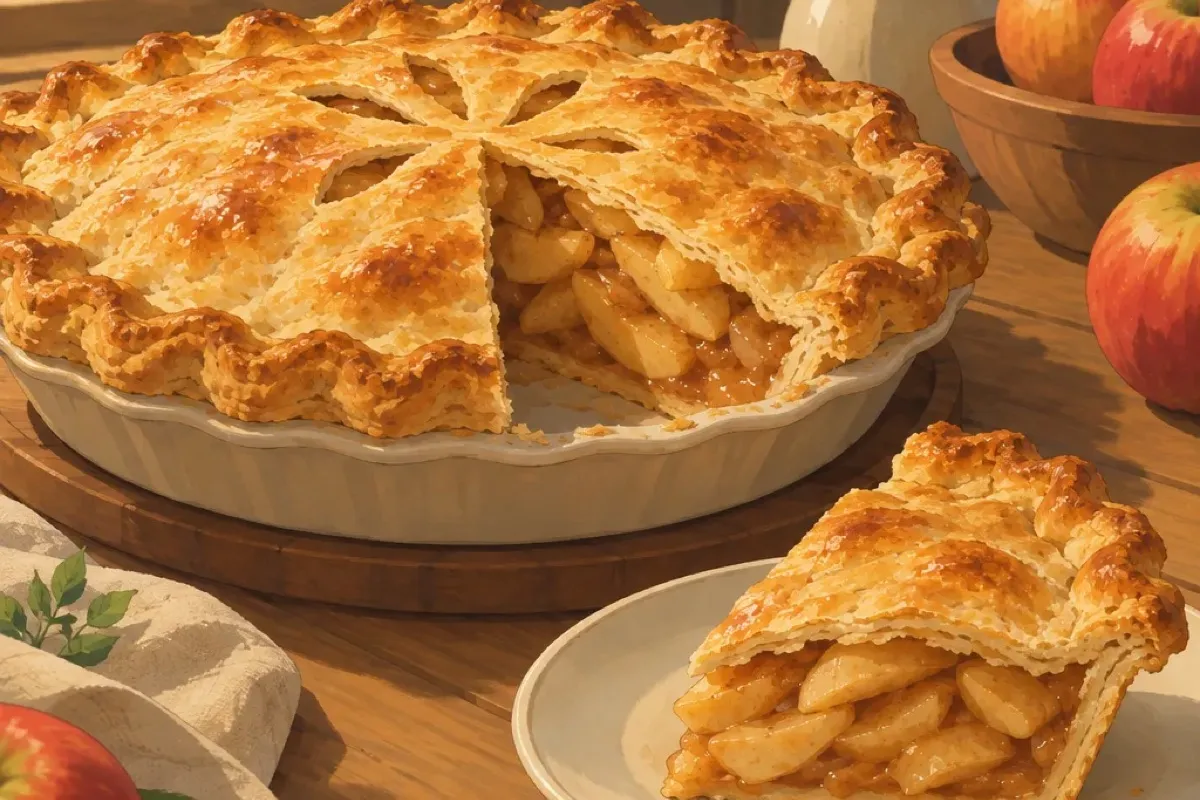
A flaky crust comes from cold butter left in uneven pieces, which melt in the oven and leave layers. Toughness comes from too much water or too much handling, so add water a little at a time and stop as soon as a squeezed handful holds together. To keep the crust from shrinking, chill the dough at least 30 minutes, roll it wider than you think you need, settle it into the pan without stretching, and chill it again for 30 minutes before baking. For a custard pie or a no-bake filling, prebake the shell with weights so the bottom isn't soggy.
What went wrong, and what to change next time
| What happened | Likely cause | What to change |
|---|---|---|
| Crust pulled down the sides of the pan | The dough was stretched to fit, or it never got a second chill | Roll it wider, let it settle in without pulling, and chill it 30 minutes in the pan |
| Crimped edge slumped | An all-butter crust, or a warm one | Use part shortening, or chill the edge again for 15 minutes after crimping |
| Crust was tough | Too much water or too much handling | Add water 1 tablespoon at a time and fold the dough instead of kneading it |
| Crust was mealy and crumbly, with no flakes | The butter was worked in completely | Stop while you can still see pea-size pieces of butter |
| Bottom was pale and damp | Wet filling on raw dough | Bake a metal pan on a preheated sheet, and partly prebake the shell for a pumpkin or custard pie |
Causes and fixes are from King Arthur Baking and America's Test Kitchen, linked under sources.
Step-by-step
- 1
Decide between all butter and part shortening
Butter has the best flavor, and King Arthur Baking found that more of it makes a flakier crust, because the water in it turns to steam. It also melts at a lower temperature than shortening, which holds its shape in the oven, so an all-butter crust is more likely to shrink and to lose a fancy edge. King Arthur Baking's classic crust uses both and is a good one to start with. For two crusts, it calls for 2 1/2 cups (300g) all-purpose flour, 1 1/4 teaspoons table salt, 1/4 cup (46g) shortening, 10 tablespoons (142g) very cold unsalted butter, and 6 to 10 tablespoons of ice water. If you want all butter, use a recipe written that way, since the amounts change.
- 2
Keep the butter cold and leave the pieces uneven
Whisk the flour and salt, then rub in any shortening until the mix looks like coarse sand. Cut the butter into 1/2-inch cubes and work it in quickly with your fingers, a pastry cutter or a mixer, stopping while the pieces are still uneven, most about the size of a pea and some smaller. Rolling flattens those pieces into sheets, which leave layers behind when they melt in the oven. If you keep going until the butter disappears, you get a mealy crust instead of a flaky one. Cold ingredients keep the fat from spreading through the dough, which is why the water should be ice cold too.
- 3
Add the water a tablespoon at a time and squeeze to test it
Flour and water make gluten, and too much gluten makes a pie crust tough. Drizzle in 4 tablespoons of ice water, toss gently with a fork, and then add more 1 tablespoon at a time. After each addition, gather a handful and squeeze. If it holds together, even if it looks rough and uneven, you have enough. How much you need changes with the flour, which is why the recipe gives a range. To bring in the last dry bits, press the dough into a rough rectangle on parchment, fold it in thirds like a letter, and repeat, misting any dry spots with cold water. Folding handles the dough less than kneading does.
- 4
Chill the dough at least 30 minutes
Divide the dough in half, shape each piece into a disk with smooth edges, then wrap and refrigerate. King Arthur gives it 30 minutes to overnight, and America's Test Kitchen asks for 45 minutes to 2 days. Chilling firms the fat and relaxes the gluten, which makes the dough easier to roll and less likely to pull back in the oven. The dough is ready when it feels cold all the way through but still bends, so after a night in the refrigerator it may need some time on the counter first.
- 5
Roll the dough wider than the pan and let it settle in
Dough that is pulled to reach the rim springs back in the oven, so give yourself extra. For a 9-inch pie in a standard 1 1/2-inch-deep pan, roll the dough 13 to 14 inches wide, which leaves enough for a tall crimp. Work from the center outward with firm, smooth strokes, using as few as you can. Set the dough in the pan and let it settle into the corners without stretching it, leaving at least 1 inch hanging over the rim. For a single-crust pie, fold the extra under and crimp it. For a double-crust pie, wait to crimp until the pie is filled and the top crust is on.
- 6
Chill the crust again in the pan
Refrigerate the shaped crust for about 30 minutes while you make the filling. This firms the fat back up and lets the gluten relax again after rolling. America's Test Kitchen goes further, with 30 minutes after fitting the dough into the pan and another 15 after crimping.
- 7
Blind bake the empty crust if the filling needs it
Blind baking means baking the crust before it has a filling. A no-bake filling like banana cream needs a fully baked shell. Custard and pumpkin pies tend to come out with a pale, soggy bottom, so a partly baked shell helps there. A double-crust fruit pie doesn't need this at all. Line the chilled crust with foil or parchment and fill it about two-thirds full with pie weights, dried beans, uncooked rice or granulated sugar, which hold the sides up while the dough sets. King Arthur bakes at 375°F for 20 minutes and removes the weights, which is all a partial bake needs. For a full bake, prick the bottom with a fork and bake 20 to 25 minutes more, until golden all over. America's Test Kitchen fully bakes its shell in a hotter oven, 425°F for 15 minutes with weights and then 5 to 10 minutes without, until golden brown and crisp. Both work, so use whichever your recipe gives.
Common mistakes to avoid
- ✕
Putting the dough in the freezer to save time
By the time the center of the disk is cold, the outside has turned brittle and hard to handle. The refrigerator is slower but chills the dough evenly.
- ✕
Setting a glass or ceramic pan on a hot baking stone
A preheated stone or steel is a good way to brown the bottom crust, but the sudden temperature change can shatter glass or ceramic. A rimmed baking sheet preheated on the lowest rack gets a similar result and also catches drips. Use a metal pan for either method.
- ✕
Filling a custard pie before it reaches the oven
A pan filled nearly to the rim with pumpkin custard is hard to carry to the oven without spilling. Instead, set the empty crust on the oven rack and then pour in the filling, stopping just short of the rim.
Why Culinary Card works for this
Once you land on a crust that works in your kitchen, write down what you changed, because it's easy to forget by next November. You can do that on an index card, or paste the recipe into Culinary Card and print it as a 4×6 card.
Frequently asked questions
Does vodka really make pie crust better?
It makes the dough easier to roll without making it tough. America's Test Kitchen's recipe replaces half the water with vodka, 1/4 cup of each for a double crust. Vodka is only about 60 percent water, so it produces less gluten, which lets you add more liquid and still get a tender crust. The alcohol cooks off in the oven, and the crust doesn't taste like it. Any 80-proof liquor works. You don't need it, though, since adding the water carefully and chilling the dough well also make a good crust.
Does vinegar make pie crust more tender?
Not by much. King Arthur says a splash of vinegar doesn't noticeably limit gluten. It does keep the dough from oxidizing and turning gray, which helps if the dough will sit in the refrigerator for a day or two.
How far ahead can I make pie dough?
Well wrapped, it keeps in the refrigerator for up to 2 days by America's Test Kitchen's count and 2 to 3 by King Arthur's. For longer storage, freeze the disks wrapped in plastic and then foil. King Arthur gives 2 months on one page and 3 on another, so 2 is the safer number. Thaw it before rolling. The Thanksgiving timeline linked below moves frozen dough to the refrigerator the day before you bake.
Can I make a whole pie ahead and freeze it?
For a fruit pie, yes. Assemble it, wrap it tightly and freeze it unbaked, then thaw it overnight in the refrigerator and bake it the next day as usual. A baked pumpkin pie can also go in the freezer, where it keeps its best quality for up to 2 months.
How long can a baked pie sit out?
Pumpkin, custard and cream pies contain eggs or dairy, and University of Illinois Extension says they should not be out of the refrigerator for more than 2 hours. An apple pie or other fruit pie with no dairy can stay at room temperature, loosely covered, for up to 2 days. Pumpkin pie keeps up to 4 days in the refrigerator, so one baked on Wednesday is safe for Thanksgiving Day if it goes in within 2 hours of leaving the oven.
Should I use a metal, glass or ceramic pie pan?
All three make a good pie. Metal heats fastest and takes sudden temperature changes well. Glass is slower to heat but holds heat well, and you can see through it to check whether the bottom has browned. Ceramic varies by brand. If your bottom crust comes out pale, try a partial prebake on a pumpkin or custard pie, or a preheated sheet under a metal pan, before buying another pan.
What do I do if the dough tears?
Patch it with a scrap of dough. Wet the side that gets sealed down with a little water and press it on. Nobody will see it once the pie is filled. Leftover scraps can be rolled 1/8 to 1/4 inch thick, sprinkled with sugar and baked alongside the pie for 10 to 15 minutes.
Sources
- How to keep pie crust from shrinking, once and for all, King Arthur Baking
- The secret to super-flaky pie crust, King Arthur Baking
- All your pie questions, answered, King Arthur Baking
- Classic double pie crust, King Arthur Baking
- Foolproof pie dough for double-crust pie, America's Test Kitchen
- Baked pie shell, America's Test Kitchen
- Pie crust Q&A, America's Test Kitchen
- Do I need to refrigerate the pie?, University of Illinois Extension